FrontCom® Vario service interfaces
Efficient access to systems and processesFrontCom® Vario – even more flexible thanks to new inserts

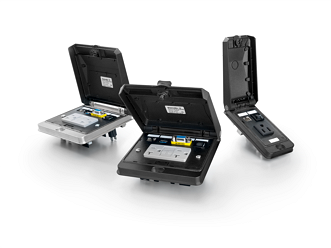
Efficient access to systems and processesFrontCom® Vario – even more flexible thanks to new inserts
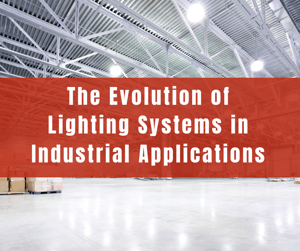
Even though LEDs have proved their worth as energy efficient solution to lighting, the decades-old investment in conventional lighting fixtures has delayed their large-scale implementation. For the past few years, several of these legacy systems have started approaching their end-of-life, meaning they are being replaced by new technologies such as LEDs.
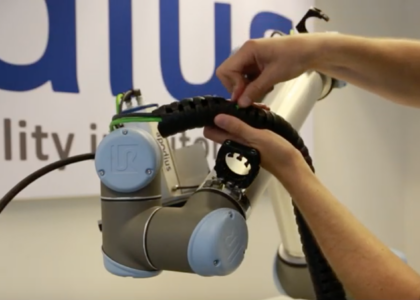
Do you operate a UR collaborative robotic arm? Watch as our friends at Apodius GmbH install the igus® triflex® R cable management system for collaborative robots.
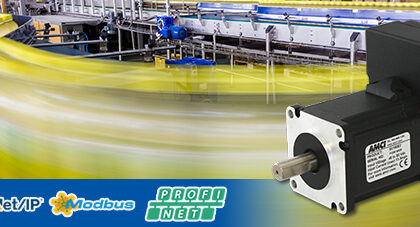
SV160E2 Networked Series Integrated Servo Motor + Controller + Drive
AMCI releases the SV160E2 Integrated Servo Motor, expanding their line of motion controllers beyond stepper technology. The SV160E2 incorporates a servo motor, drive, and controller in a single unit. AMCI’s SV160E2 Integrated Servo Motor offers many sophisticated features and the compact design eliminates the need to purchase a multiple components because they are all built-in. AMCI’s SV160E2 Integrated Servo Motor is ideal for both new machinery and retrofit applications.
Features:
Servo Motor + Drive + Indexer integrated for optimum performance
Dual-port networking offers offers DLR for EtherNet/IP & MRP for Profinet
Multi-protocol – EtherNet/IP, Modbus-TCP, & Profinet networks built-in
Programs using your host controller’s software – nothing new to learn!
Space saving design simplifies installation with reduced wiring
IP50 rated
For more info, contact PCC
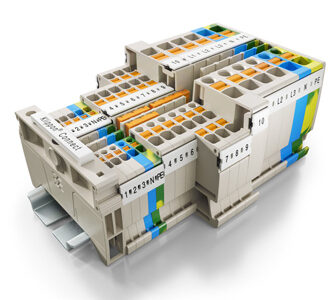
Application range
Custom-fit solutions for recurring applications
While panels are indeed configured individually, various recurring application fields within the panel are a permanent fixture in almost all industries.
We have identified and developed special solutions for these application fields:
Needs-based application products which decisively help to boost your productivity and safety
With product functions that are purposefully structured and adapted to the respective requirements
For extra efficiency at all stages of the panel building process
Product Offerings: Terminal Blocks (Screw, Spring Clamp, Push-In)Heavy Duty ConnectorsSignal Conditioning, Surge & Overvoltage ProtectionRemote I/O, Ethernet SwitchesConnectors, Cables, Wireless Ethernet & I/OPower Distribution Systems, CordsetsEnclosuresTools for ElectriciansMarking Systems
Catalogs:
Weidmueller Circuit and Surge Protection
Weidmueller Enclosures and Cable Glands
Weidmueller Heavy Duty Connectors
Weidmueller Industrial Ethernet
Weidmueller Lightning & Surge Protection
Weidmueller Markers, Printers and Software
Weidmueller Relays, Solid-State Relays, Timer and Safety Relays
Weidmueller Remote IO
Weidmueller Signal Converters, Trip Amplifiers and Process Meters
Weidmueller Switched-mode and Uninterruptible Power Supplies and Electronic Fuses
Weidmueller Tools
Weidmueller Wireless IO and Ethernet Connectivity
Want PCC to contact you with more information about Weidmueller? Complete the form below and we’ll get back to you shortly.
Name*
First
Last
Email*
Company
Phone
CAPTCHA
Δ
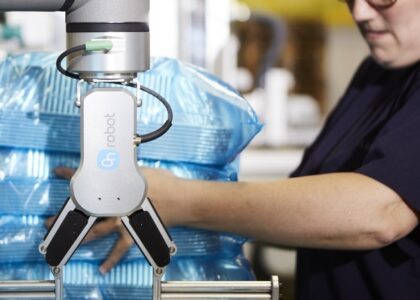
When you’re ready to automate your manufacturing processes, one of the first questions you’ll face is whether to use traditional industrial robots or collaborative robots (often called cobots). While there are many differences, it’s important to remember that robots are only part of the equation. The robot itself can’t do any work without end-of-arm tooling (EoAT) such as grippers or sensors. If you’re looking into collaborative automation, EoAT is the key to optimizing your processes and growing your business with greater flexibility, higher output, and improved quality.
Let’s look at the differences.
Industrial robots are typically large, fixed equipment designed for high-volume, extremely high-accuracy, and high-speed production. Because of the speed of the robot’s arm movement, industrial robots can present safety risks to human workers, so they usually require safety measures such as a cage to keep humans out of the robot’s work envelope. The integration of the robot and its safety caging can drive costs up substantially, as can the need for professional services to program these complex robots and integrate them with other production equipment and machines. These characteristics make traditional robots best-suited for production processes that will continue unchanged for years, where return on investment (ROI) can also take years.
For traditional industrial applications, EoAT will often be highly specific for the task. Because human workers are kept out of the work envelope, the tool doesn’t need to be designed for collaborative safety, and since the application will be programmed by an integrator, simplicity isn’t required.
Collaborative robots are ideal for manufacturers with low-volume, high-mix production or who need to safely automate processes alongside human workers. That might include automating a repetitive task and handing a part off to a human for inspection or to complete a complex assembly process. Cobots typically have lower upfront costs and are easy to program with no previous experience, so they offer fast ROI. They are small and lightweight enough that they can be easily moved and redeployed to automate different processes throughout a manufacturing facility. These versatile, cost-effective, and user-friendly tools allow businesses of almost any size (and any level of technical expertise) to increase productivity, improve quality, and respond more nimbly to changing customer demands.
The EoAT becomes a critical element of getting the most out of your collaborative robot. These tools are designed for safety around human worker and to be easy to program through the robot’s teach pendant. They’re cost-effective, highly flexible, and easy to change for different processes to support fast ROI and quick results.
If you’re leaning toward collaborative robotics, it’s important to consider EoAT to make sure you optimize your investment and gain the full advantages of your cobot.
Traditional Applications
Big batches, little variability: Ideal for large companies that manufacture high volumes of the same products for long periods
Complex deployment: Requires extensive programming skills and takes days or weeks to set up
Requires constancy: Programmed for unchanging environment and the same movement with minimal need to adapt
Not safe without guarding: Typically requires safety guarding to keep human workers out of the robot’s work cell
Focus on the robot: Repeats the same actions for years, with unchanging tool that is integrated for a specific process
Big investment, longer ROI: Expensive robots, system integration, and operator training requires large upfront investment and takes longer for ROI
Collaborative Applications
Low-volume, high-mix: Designed for low-volume, high-mix production, where the robot is often redeployed for new processes
Fast and easy deployment: Easy to deploy with simple programming that even inexperienced users can set up within minutes
Adapts to environment: Flexible to adapt to changing environment and workpieces to be handled
Collaborative and safe: After risk assessment, humans can work alongside robot in collaborative applications
Focus on the EoAT: As robot arm becomes a commodity, focus shifts to EoAT to increase robot utilization
Lower upfront cost, faster ROI: Competitive pricing, in-house integration, and ease-of-use minimize up-front costs and speed integration, uptime, and ROI
Collaborative EoAT Requirements
Easy to change: Flexible, quick-change tooling to eliminate downtime between various processes
Easy to program: Tooling that is fast and easy to program and deploy using the cobot’s built-in teach environment
Adaptable: Tools that easily adapt to varying sizes, shapes, and conditions of workpieces and the environment
Designed for safety: Safe, collaboratively designed tools that simplify interaction with humans
Flexible: Flexible tooling that can be used for multiple processes
Fast integration: Cost-effective tooling that speeds integration and reduces need for additional equipment
Name*
First
Last
Email*
Company
Phone
CAPTCHA
Δ
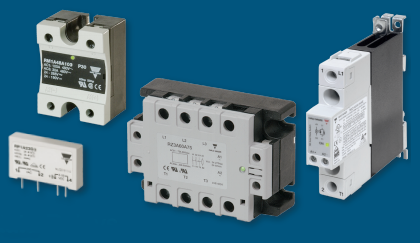
A solid state relay (SSR) is an electronic device that switches loads on or off when an external voltage or signal is applied to its control terminals. The lack of moving parts in an SSR allows it to switch much faster than electromechanical relays while avoiding the creation of electrical arcs. Solid state relays are also silent, so users won’t be subjected to the annoying noise associated with electromechanical relays. Furthermore, because SSRs have no moving parts or contacts that can wear out, they last much longer and require less maintenance than electromechanical relays.
SSRs are used in a wide variety of applications where quick, silent switching is advantageous. Some of these industries include: plastics/rubber, food and beverage, processing, packaging, HVAC, semiconductor, oil/gas, transportation, conveyors, power or energy systems, printing, laboratory, kiln/ oven, lighting, medical/pharmaceutical, and motion control. Carlo Gavazzi has developed a “TechTip” to help you discover some beneficial technical tips on selecting the best monitoring device for your machinery.
Download the Tech Tip: Properly Selecting Solid State Relays
December 12, 2019 – 1 Day Online Event

Thank you to everyone who attended PCC’s 2019 Oktoberfest – Tap into Technology Event! Oktoberfest returned to the Washington County Fair Park and Conference Center in West Bend, WI on October 24.
This year we were excited to announce the addition of our newest line, Weidmueller. Weidmueller has a ready-made connection for everything between the control and sensor actuator levels. At the event Weidemuller raffled off some of their popular tools. Along with this exciting announcement, PCC also received their 7th Siemens Bronze Eagle Award from our presenting sponsor! We’re honored to receive this prestigious award.
The Oktoberfest Automation Fair was a popular attraction at the event, allowing our attendees to get one-on-one time with our vendors and their latest product offerings. Many noted they were able to see first hand solutions to projects they were working on, as well as were introduced to new lines they may have not been aware of. PCC’s collaborative robot solution was running through out the day and the latest in gripper technology was featured by our partner, OnRobot. New this year, Siemens hosted a Tech Cafe where attendees could test out Siemens hardware and software by completing common engineering tasks.
PCC and our vendors presented over 29 seminars and hands-on workshops covering topics including Cyber Security, Machine Safety, Motion Control, Industrial Networking, Micro Automation and so much more. Drew Batten of the Department of Homeland Security gave an insightful seminar on Cyber Attacks on Critical Infrastructure.
Once all the training sessions were completed, we tapped into the beer and all attendees were given our memorable Oktoberfest steins sponsored by TR Electronic. The Oktoberfest reception was capped off with raffle prize drawings, virtual reality experiences, cornhole, our favorite Milwaukee Pretzel Company pretzels, and of course hammerschlagen.
We are very pleased to have spent a fun day of education, product knowledge discussions, training and sharing industry insights with you. PCC plans to continue to grow this event and provide valuable training and education in the years to come. If you have any feedback regarding this year’s event, please feel free to reach out. If you’d like to request the presentations, please contact [email protected].
PROST!
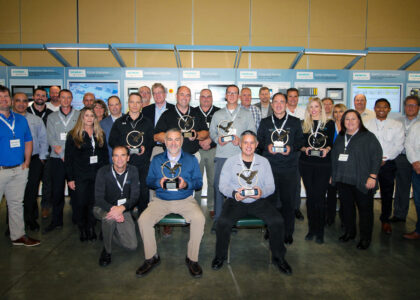
PCC is proud to share the latest addition to our Siemens Bronze Eagle collection. This summer, PCC learned we would be awarded with another Siemens Bronze Eagle. This is the highest honor a distributor can receive from Siemens. To celebrate this recognition, Siemens presented PCC with our 7th Eagle during our 7th Annual Oktoberfest – Tap Into Technology event on October 24th.
This award is presented to those distributors in recognition of their sales achievement, support capabilities and overall commitment to business excellence. Every year less than 5% of those who are eligible receive this prestigious award. We are both thrilled and honored to receive this award as we look ahead into our 40th year in business and continued partnership with Siemens.
The PCC and Siemens team at PCC’s Oktoberfest event.