
Enter your search term:
x

Uncategorized

Uncategorized

What is IO-Link?

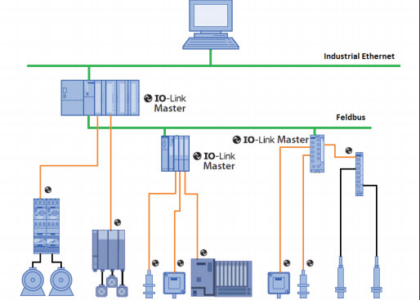
IO-Link is a serial, digital communication protocol for use in automation technology. It is used to connect sensors or actuators to an automation system. With IO-Link, the “last meter” of communication with sensors and actuators is digitized. IO-Link is standardized in IEC 61131-9. Where previously only binary switching states (on/off) or analog signals were transferred, now status information can also be read by the sensor or actuator and configuration data transferred to the sensor and actuator.IO-Link is not another bus system, but rather a point-to-point connection between the IO-Link device and a connection unit, the IO-Link master.
Uncategorized

Overview of Industrial Sensors

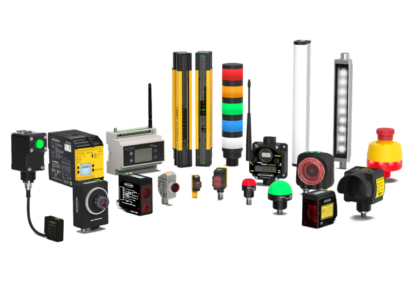
In the current state of factory operations, sensors are key components to data acquisition and instrument measurement. In its simplest terms, an industrial automation sensor is defined as an input device that provides an output signal with respect to a physical quantity (input). Modern plants utilize a multitude of various sensors, each with its own unique design and duty. Below, we’ll detail some of the common industrial sensors and outline how they help a plant become more cohesive, efficient, and ultimately save money.

Uncategorized

Best Practices for DCS Migration

While modernization and advances in technology can make life easier for operators and company personnel, it can often be a double-edged sword. Aging and outdated technologies in plants are frequently in need of upgrades and repairs, which can contribute to significant delays in workflow. No example is more relevant today than the problem companies face with their distributed control system (DCS). DCS is a computerized control system for a process or plant with many control loops, in which autonomous controllers are distributed throughout the system. Because DCS is an integral and essential component in day-to-day operations but is also becoming quickly outdated, it is more and more necessary for companies to consider DCS migration, which involves upgrading the system and processes to newer technologies. Below we’ll provide some common practices for DCS migration, weighing out the pros and cons of each.

Uncategorized

Keeping an HMI/SCADA Safe

With aging technology and systems along with the rise of cybersecurity risks, it is now more important than ever to keep your human-machine interface (HMI) and supervisory control and data acquisition (SCADA) system safe. Here are a few simple steps you can use to minimize unplanned downtime and protect your organization and systems:

Uncategorized

Why Risk Assessment is Crucial

Because of the rigorous nature of the work and the heavy machinery involved, factories and manufacturing plants can often be dangerous working environments. Therefore, risk assessments – commonly known as the foundation of making a machine safer – are necessary to curb potential hazards. A risk assessment is a logical, step by step breakdown of a machines’ processes, separating all the individual hazards so as to be able to focus on one at a time. As the industry continues to grow and more machines enter the work environment, risk assessments are critical to quell potential hazards and keep workers safe.

Uncategorized

The Impact of AI on Factory Automation

While the general population may have an archaic understanding of the inner workings of a factory, the truth is that the smart factory revolution, also known as Industry 4.0, has taken leaps and bounds over the past several decades. The rise of automation and smart technologies are at the forefront of this revolution. However, in recent years, artificial intelligence (AI) has become a mainstay in the future of Industry 4.0. While AI continues to drive automation, manufacturers are now looking at it to promote efficiency in a variety of new avenues.

Uncategorized

Beginners Guide to SIL Levels

During the normal course of work, manufacturers must take special care to monitor the safety of the employees, instruments, and processes involved. Therefore, Safety Implemented Systems (SIS) are installed in process plants to reduce the possibility of hazards and return certain processes to a safe state in the case of an emergency. An SIS is used to maintain the safety of one or more Safety Instrumented Functions (SIF) as a safeguard against possible hazards. However, in order to oversee the longevity and safety of an SIS, an appropriate Safety Integrity Level (SIL) must be established. Each hazard that necessitates the use of an SIS must be given a target Safety Integrity Level.