White Paper: How to Display G120 Drive Faults Directly on HMI with No PLC Programming
Darren McCulley, Application Engineer at PCC, shows users how to display G120 drive faults on Siemens HMI.


Darren McCulley, Application Engineer at PCC, shows users how to display G120 drive faults on Siemens HMI.
We Have Some Exciting News!
We have a new logo!
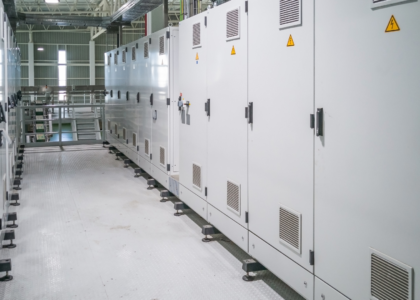
A motor control center (MCC) is an assembly to control some or all of the electric motors in a central location. With the emergence of the Industrial Internet of Things and the dawn of better, faster technology, smart motor control centers are beginning to come to the forefront as credible alternatives to standard MCCs. Below, we’ll walk through the basics of smart motor control centers. Also, we’ll discuss how a smart motor control center improves upon the functionality of a standard control center and how they can help your business for years to come.
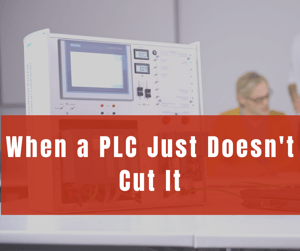
In a modern factory environment, programmable logic controllers (PLCs) are integral to day-to-day operations. During the course of operations, PLCs allow factory systems to operate reliably, while also maintaining a level of flexibility necessary to add additional models. Furthermore, PLCs can work to facilitate the troubleshooting of faulty components and also provide in-depth insight into machine health and performance. However, with the increasing complexity of industrial machinery and machine tasks, some companies are finding that PLCs cannot always satisfy their needs for high-speed data acquisition and database interaction. Because of this, modern alternatives to PLCs are being offered by a handful of companies. Below, we’ll discuss a Michigan tech company’s alternative to PLCs and how they are already utilizing their product to help various businesses around the country.
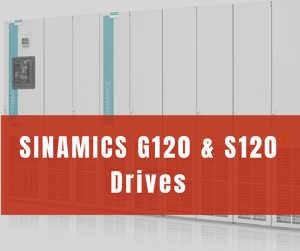
A quick-paced modern factory environment requires equally intelligent and high-tech equipment to track, monitor, and control various automated tasks. Because of this, Siemens has developed a series of converters – SINAMICS G120 and S120 – to handle more complex applications. Below, we’ll walk through the specific functionality and uses of these devices as well as the additional safety features built-in to maintain factory security. While we’ll be discussing these specific converters, it is important to understand that the same functionality can be found across a wide range of industrial converters, so don’t worry if you’re not specifically using a Siemens device.
During the past several decades, artificial intelligence (AI) and machine learning have become integral in the automation process. To the uninitiated, artificial intelligence is defined as “a wide-ranging branch of computer science concerned with building smart machines capable of performing tasks that typically require human intelligence”. A subset of artificial intelligence, machine learning specifically focuses on giving systems the ability to learn and optimize processes without having to be consistently programmed. Modern factories have fully embraced these two practices and implemented them into the automation process with great success. Below, we’ll discuss the benefits artificial intelligence and machine learning have brought to the modern factory and how these technological feats continue to influence and streamline productivity.
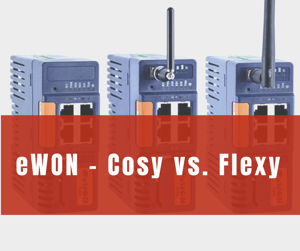
An industrial router is a key tool to meet a modern factory’s connectivity and data collection needs. Through on-demand remote connectivity to PLCs, on-premise data monitoring, and data collection for IoT applications, industrial routers help streamline and condense your factory’s workflow into one finite place. However, there are different models of industrial routers depending on your business’ needs. Below, we’ll explore the distinctions between two industrial routers developed by eWON – COSY and FLEXY – and hopefully assist you in selecting which router works the best for your company.
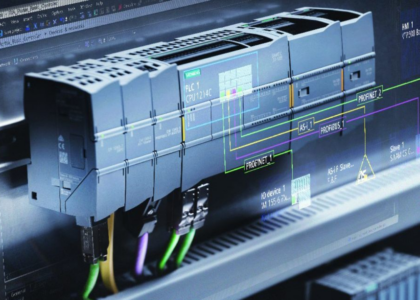
A programmable logic controller (PLC) is an industrial digital computer which is used for the control of manufacturing processes. With the rise of new technologies, PLCs are now mainstays in the majority of factory environments and help facilitate day-to-day automation. Because of the significant role of PLCs in working factories, safety is placed at a premium when developing this new technology. Below, we’ll walk through the basics of machine safety in a PLC, the distinction between a standard PLC and a safety PLC, and how a safety PLC can be advantageous to your business in the long run.
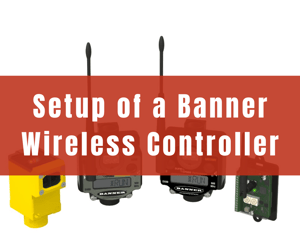
Wireless technology is a burgeoning and now nearly ubiquitous facet of a modern factory environment. Perhaps the most pivotal piece to a factory’s wireless network is its wireless controller. A wireless controller is the heart of the factory’s production, providing users the ability to communicate with various material handling systems such as overhead cranes, conveyor systems, and transfer cars just to name a few. This functionality streamlines production and allocates all the pertinent data and information into one place, greatly simplifying things for your business. With all this being said, the setup of a wireless controller can often be a daunting and complex task. Below, we’ll walk through a simplified version of how to set up your wireless controller and provide more details on how they can help your business cut costs, save money, and prosper in the long run.
A virtual machine is an emulation of a computer system, giving the user a completely separate, singular operating system installation on your regular OS. This duality can provide unique benefits to users, especially in the field of industrial automation. Below, we’ll walk through the primary advantages of a virtual machine as well as a few basic tasks that users can employ with the aid of a virtual machine.