

Enter your search term:
x

March 2024

Uncategorized

Industrial Wireless Automation

From improved productivity and more organized asset management to reduced costs (due to the elimination of extraneous wires) and easier accessibility to plant information, wireless technology in industrial automation offers a wide range of benefits to help improve your business. However, in spite of the advantages, wireless technology can offer its own set of challenges, whether in fully implementing or overcoming regulation standards. Below, we’ll walk you through the basics of wireless technology in industrial automation – the pros and cons – and analyze why it could be right for you.


Uncategorized

C- Series Thermal Imaging Systems by FLIR

Introduction
The FLIR C-Series are a set of portable, full-featured, thermal cameras for use in thermal inspection of buildings, electrical/electronic, and mechanical systems. They are excellent non-destructive tools for fault location and verification of the repairs performed. You can carry them in your pocket so that you are ready to find hidden plumbing blockages, HVAC issues, structural defects, hotspots, and various other problems. The MSX system allows real time superposition of optical image over the IR picture for identification of faulty components. 

Uncategorized

The Future of Remote I/O

Industrial I/O devices have become a much-needed compulsion in the world of automation and form the nervous system of modern machines. Reliable and instant remote monitoring and control of equipment, control-systems, DBs, etc. have always been the key goals of all industrial plants. Since the inception of computers or more specifically PLC (programmable logic controllers), there have been many protocols and gateways that have allowed remote operation in one form or another.

Uncategorized

Simotics VSD4000 with Sinamics S120

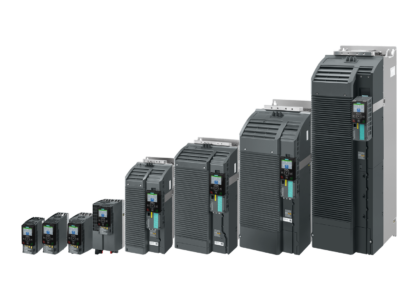
Siemens has always distinguished itself from the competition by providing solutions rather than products and it has done so once again with an addition to its Integrated Drive Systems (IDS) portfolio with a new drive series based synchronous-reluctance technology. The motor technology has an extremely high-efficiency and is integrated with a cutting-edge converter, both specifically harmonized to facilitate a cost-effective operation.

Uncategorized

How IoT is Changing Manufacturing

Revolutionizing the Manufacturing Industry
Internet of Things (IoT) sits at the heart of Industry 4.0, the current trend of automation and data exchange that is hitting industries worldwide and becoming an essential component for cyber-physical systems. IoT holds great technical and economic worth as it promises to lower operational costs, increase durability of products and turn remote operation a reality. Experts have estimated that by 2025 there would be over 100 billion connected IoT devices, having a global impact of $11 trillion.
At the very core of IoT is the “Smart Factory”, a term used to describe an industrial environment that fully utilizes the power of Industry 4.0 concepts.

Uncategorized

Building Energy Efficient Control Panels

For many industrial companies, energy is one of the biggest expenses they have to burden, and even though control panels are a vital component to any process plant, their potential to offer energy savings is often overlooked. Energy-efficient motors use less electricity, run cooler, and often last longer than NEMA (National Electrical Manufacturers Association) B motors of the same size. Here are some of the top advantages of energy-efficient control panels.

Uncategorized

How IoT will change the Engineering Industry

When old-school engineers are preached about the upcoming wave of Industry 4.0 technologies and how they will revolutionize plant operations with remote connectivity, they often respond with little excitement, and with good reason. Embedded system is a well-established technology within the industry that has offered remote connectivity for decades now, be it HVAC systems, assembly lines or chemical tanks. So, if everything was available from the start, why the IoT buzz then?

Uncategorized

Importance of Risk Assessment in Manufacturing

Manufacturing companies invest millions in human and equipment in the bid to achieve peak productivity and profits. Achieving monthly revenue targets may be the most vital factor when it comes to procurement of such assets, there are certain factors that can drastically affect the workings of a company. By investing in machinery, tools, personnel, etc. companies open themselves up to greater level of risks. Small mistakes can have wide ranging consequences that can affect the company’s reputation within the market.

Uncategorized

Tips for a Robust Ethernet Network

Ethernet is being speedily adopted by manufacturing industries as the prime medium for communication due to a vast number of reasons. Ethernet networks offer the greatest efficiency, flexibility and reliability capabilities to a network engineer, making it ideal for an industry that requires all three of these qualities. The increasing trend towards Industrial Automation has only increased the demand for robust ethernet networks as the entire concept relies heavily on error-free, reliable communication.