
Enter your search term:
x

March 2024

Uncategorized

How AMRs Address Skilled Labor Shortages in Material Handling

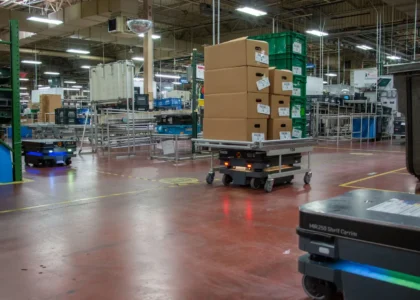
In recent years, the logistics industry has expanded at an unprecedented rate, thanks to increasing expectations from e-commerce consumers. However, finding workers who are willing or available to take on a job in logistics is proving to be a serious threat. And the problem doesn’t just apply to jobs related to manual work on the shop floor, but also at a more academic or skilled level. To mitigate the labor shortage logistics companies are turning to robotic automation to boost productivity of the existing workforce like autonomous mobile robots (AMRs). However, companies are finding the benefits of adding AMRs to their facilities go further than this:Increase appeal of workplaceThe intuitive, safe and sophisticated AMR can take on risk-prone or repetitive tasks, reducing the likelihood of workplace injuries or job dissatisfaction. Not only does this create a safer environment, it also allows skilled staff to swap the time spent on less interesting and rewarding tasks, for complex, more appealing ones. This combination helps create a more appealing workplace aiding the recruitment and retention of the necessary workforce.Optimize workflowsIn the highly pressured 3PL industry, an optimized and responsive workflow is essential for success. The autonomous mobile robots from MiR use sophisticated programming technology, scanners and cameras to make optimal decisions at all times. The AMRs remove human error and the need for as many inventory checks, meaning 3PL providers can see shorter and more responsive workflows with reduced bottle necks. The collaborative nature of the mobile robot also means that it can safely work alongside its human counterparts, responsibly optimizing productivity. By keeping flows and processes tight and responsive, AMRs provide can provide huge value to the 3PL industry.Cost optimizationFrom fines and reputational damage, to lost workdays and damaged equipment, it can be hard to calculate the true cost of workplace injuries. Recent statistics place the figure between $52 billion and $60 billion a year for injuries in the US, but it’s not just the direct costs, but also decreased productivity and increased employee turnover as well. By implementing AMRs from MiR, which use a multi-sensor safety system to avoid collisions, businesses can see significant cost optimization.Fighting the future with AMRAs the need for increased supply chain flexibility and efficiency intensifies, the adoption of autonomous mobile robots accelerates. The latest industry findings show that by 2021, 58% of logistics providers will use AMR. By 2024, this number will hit 100%.
{% module_block module “widget_6fa3b755-6f78-4cad-8bb4-783db85e4eef” %}{% module_attribute “child_css” is_json=”true” %}{% raw %}{}{% endraw %}{% end_module_attribute %}{% module_attribute “css” is_json=”true” %}{% raw %}{}{% endraw %}{% end_module_attribute %}{% module_attribute “definition_id” is_json=”true” %}{% raw %}null{% endraw %}{% end_module_attribute %}{% module_attribute “field_types” is_json=”true” %}{% raw %}{“content”:”group”,”icon”:”group”,”icon_content”:”group”,”style”:”group”,”video_link”:”text”,”video_poster”:”group”}{% endraw %}{% end_module_attribute %}{% module_attribute “label” is_json=”true” %}{% raw %}null{% endraw %}{% end_module_attribute %}{% module_attribute “module_id” is_json=”true” %}{% raw %}99176435365{% endraw %}{% end_module_attribute %}{% module_attribute “path” is_json=”true” %}{% raw %}”@marketplace/MakeWebBetter/Environmental/modules/video”{% endraw %}{% end_module_attribute %}{% module_attribute “schema_version” is_json=”true” %}{% raw %}2{% endraw %}{% end_module_attribute %}{% module_attribute “smart_objects” is_json=”true” %}{% raw %}[]{% endraw %}{% end_module_attribute %}{% module_attribute “smart_type” is_json=”true” %}{% raw %}”NOT_SMART”{% endraw %}{% end_module_attribute %}{% module_attribute “style” is_json=”true” %}{% raw %}{“alignment”:{“alignment”:”center”},”corner”:{“border_radius”:0},”enable_frame”:false,”icon”:{“background_color”:{“color”:”#CCCCCC”,”css”:”#CCCCCC”,”hex”:”#CCCCCC”,”opacity”:100,”rgb”:”rgb(204, 204, 204)”,”rgba”:”rgba(204, 204, 204, 1)”},”icon_color”:{“color”:”#FFFFFF”,”css”:”#FFFFFF”,”hex”:”#FFFFFF”,”opacity”:100,”rgb”:”rgb(255, 255, 255)”,”rgba”:”rgba(255, 255, 255, 1)”}},”overwrite_icon_color”:true}{% endraw %}{% end_module_attribute %}{% module_attribute “tag” is_json=”true” %}{% raw %}”module”{% endraw %}{% end_module_attribute %}{% module_attribute “type” is_json=”true” %}{% raw %}”module”{% endraw %}{% end_module_attribute %}{% module_attribute “video_link” is_json=”true” %}{% raw %}”https://youtu.be/0IFP8M1BRPg”{% endraw %}{% end_module_attribute %}{% module_attribute “video_poster” is_json=”true” %}{% raw %}{“poster”:{“alt”:”Screenshot 2024-03-26 at 9.48.35 AM”,”height”:817,”max_height”:817,”max_width”:1794,”size_type”:”auto”,”src”:”https://info.awcwire.com/hubfs/Screenshot2024-03-26at9.48.35AM.png”,”width”:1794}}{% endraw %}{% end_module_attribute %}{% module_attribute “wrap_field_tag” is_json=”true” %}{% raw %}”div”{% endraw %}{% end_module_attribute %}{% end_module_block %}
Uncategorized

Accelerating Automation Returns with MiR’s ROI Calculator

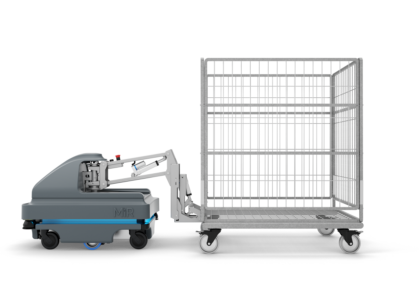
As the landscape of industrial automation continues to evolve, the return on investment (ROI) for robotic automation is accelerating at an unprecedented pace. One of the leading innovations driving this transformation is MiR’s autonomous mobile robots (AMRs), which are revolutionizing how companies approach and execute automation processes.The impact of MiR’s AMRs goes beyond mere efficiency gains; they are fundamentally reshaping productivity and internal logistics within companies, thereby enhancing competitiveness while simultaneously bolstering safety standards. Unlike traditional automation solutions that often require extensive training and complex integration processes, MiR’s AMRs stand out for their user-friendly interface, seamless integration capabilities, and straightforward programming. This eliminates the need for costly and disruptive reconfiguration of existing infrastructure, allowing companies to swiftly implement automation solutions without major operational disruptions.Moreover, the advanced capabilities of MiR’s AMRs in detecting, avoiding, and navigating around both fixed and moving obstacles are a game-changer. This unique feature not only ensures the safety of employees working alongside these robots but also facilitates a seamless collaboration that maximizes productivity. By consistently and reliably delivering supplies to employees or designated locations, MiR’s AMRs eliminate bottlenecks and streamline workflow processes, resulting in a significant productivity boost.

Uncategorized

Unleash the Power of Dual Quick Changer

More Power for Twice the Work
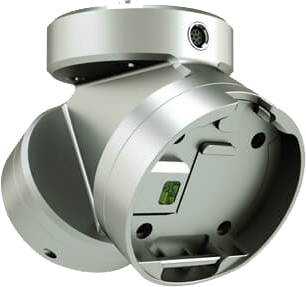
Imagine a world where your robotic arm is not limited to a single task, where it can seamlessly transition between different tools in a heartbeat. Welcome to the era of the Dual Quick Changer, a game-changer in robotic automation that brings twice the power and efficiency to your operations.The Dual Quick Changer is not just another tool; it’s a paradigm shift in how you harness the full potential of your robots. By equipping your robotic arm with two end-of-arm tooling (EOAT) attachments simultaneously, you open doors to a realm of possibilities.Picture this: your robot effortlessly switching between a gripper and a suction cup, or a welder and a screwdriver, all in a single cycle. The result? A dramatic reduction in cycle time, boosting productivity by a staggering 50% or more. With such speed and precision, tasks that once took hours can now be completed in minutes.But it doesn’t stop there. The Dual Quick Changer brings tangible benefits that go beyond speed:1. Faster Payback: The increased productivity translates into faster payback periods, with return on investment (ROI) achievable in as little as 3 months. Imagine the financial gains and competitive edge this could bring to your business.2. Enhanced Uptime: In CNC machine tending, every second counts. The Dual Quick Changer ensures maximum uptime, keeping your machines running smoothly without interruptions.3. Safety First: With a safe and secure locking mechanism, you can trust that your tools are firmly in place, minimizing risks and ensuring a smooth operation.Heavy-Duty Performance: Don’t be fooled by its sleek design; the Dual Quick Changer can handle payloads of up to 20 kg, making it suitable for a wide range of applications.In a world where efficiency is paramount, the Dual Quick Changer stands as a beacon of innovation, empowering you to do more in less time. Say goodbye to bottlenecks and hello to a new era of robotic prowess. Experience the future of automation with the Dual Quick Changer – because sometimes, more is indeed better.
{% module_block module “widget_b8847df0-51ec-4af3-950e-69a86ebf87de” %}{% module_attribute “button_text” is_json=”true” %}{% raw %}”Download”{% endraw %}{% end_module_attribute %}{% module_attribute “child_css” is_json=”true” %}{% raw %}{}{% endraw %}{% end_module_attribute %}{% module_attribute “css” is_json=”true” %}{% raw %}{“border-radius”:”10px”,”padding-bottom”:”20px”}{% endraw %}{% end_module_attribute %}{% module_attribute “definition_id” is_json=”true” %}{% raw %}null{% endraw %}{% end_module_attribute %}{% module_attribute “field_types” is_json=”true” %}{% raw %}{“button_text”:”text”,”link”:”link”,”style”:”group”}{% endraw %}{% end_module_attribute %}{% module_attribute “label” is_json=”true” %}{% raw %}null{% endraw %}{% end_module_attribute %}{% module_attribute “link” is_json=”true” %}{% raw %}{“no_follow”:false,”open_in_new_tab”:false,”rel”:””,”sponsored”:false,”url”:{“content_id”:null,”href”:”https://info.awcwire.com/hubfs/Datasheet_QuickChangers_v1.2_EN.pdf”,”type”:”FILE”},”user_generated_content”:false}{% endraw %}{% end_module_attribute %}{% module_attribute “module_id” is_json=”true” %}{% raw %}8243667{% endraw %}{% end_module_attribute %}{% module_attribute “path” is_json=”true” %}{% raw %}”@hubspot/button”{% endraw %}{% end_module_attribute %}{% module_attribute “schema_version” is_json=”true” %}{% raw %}2{% endraw %}{% end_module_attribute %}{% module_attribute “smart_objects” is_json=”true” %}{% raw %}[]{% endraw %}{% end_module_attribute %}{% module_attribute “smart_type” is_json=”true” %}{% raw %}”NOT_SMART”{% endraw %}{% end_module_attribute %}{% module_attribute “style” is_json=”true” %}{% raw %}{“button_color”:{“color”:”#E56325″,”css”:”#E56325″,”hex”:”#E56325″,”opacity”:100,”rgb”:”rgb(229, 99, 37)”,”rgba”:”rgba(229, 99, 37, 1)”},”button_font”:{“size”:null,”styles”:{“font-style”:”normal”,”font-weight”:”bold”,”text-decoration”:”none”},”fallback”:null,”size_unit”:”px”,”css”:”color: #FFFFFF;font-weight: bold;”,”color”:”#FFFFFF”,”variant”:null,”font”:null,”style”:”font-style: normal; font-weight: bold; text-decoration: none”,”font_set”:”DEFAULT”},”button_hover_color”:{“color”:”#e16931″,”css”:”#e16931″,”hex”:”#e16931″,”opacity”:100,”rgb”:”rgb(225, 105, 49)”,”rgba”:”rgba(225, 105, 49, 1)”},”override_default_style”:true,”text_hover_color”:{“color”:”#FFFFFF”,”css”:”#FFFFFF”,”hex”:”#FFFFFF”,”opacity”:100,”rgb”:”rgb(255, 255, 255)”,”rgba”:”rgba(255, 255, 255, 1)”}}{% endraw %}{% end_module_attribute %}{% module_attribute “tag” is_json=”true” %}{% raw %}”module”{% endraw %}{% end_module_attribute %}{% module_attribute “type” is_json=”true” %}{% raw %}”module”{% endraw %}{% end_module_attribute %}{% module_attribute “wrap_field_tag” is_json=”true” %}{% raw %}”div”{% endraw %}{% end_module_attribute %}{% end_module_block %}
Uncategorized

Packaging Revolution: OnRobot’s VGP20

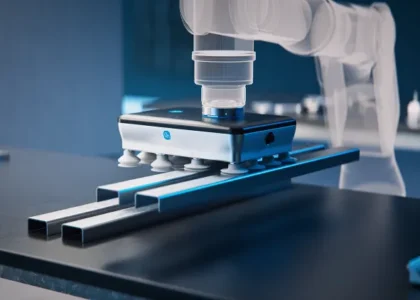
Packaging has been an important part of business operations for centuries. The $900 billion industry has emerged as an integral process of every business, from multi-million dollar corporations to small-town mom and pop shops. Protecting products during transit isn’t an inexpensive endeavor, either — especially when your systems require the use of costly materials. On average, the packaging for a product costs nine percent of its total. That’s roughly $1 per $11 spent!

Uncategorized

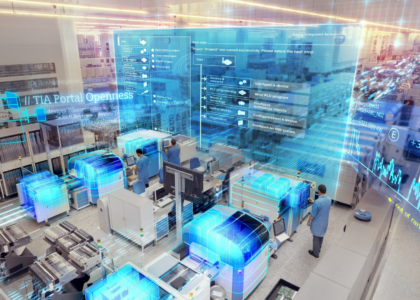
TIA Portal v15 Engineering Framework: Applications, Digitalization & Efficiency

Siemens has displayed a great deal of attention towards the prospects of digitalization, and the positive impact it would have on the industrial sector, from shortened engineering times to greater throughput. Siemens Totally Integrated Automation (TIA) Portal was introduced in 2010 to empower users to perform automation tasks quickly and with ease of use. The software product is designed to deliver a high degree of efficiency for both new & experienced users, introducing standardized concepts for controllers, HMIs and drives. The TIA Portal facilitates the entire spectrum of digitized automation including integrated engineering, digital planning and virtual operation. With the new version of the TIA portal v15, Siemens has solidified its position as an industry leader in the field of digitalization, and expanded its reach to standardization and greater engineering efficiency.

Uncategorized

Scaling to IIoT Projects

Industrial Internet of Things (IIoT) projects are redefining and shaping how modern factories and plants operate. By providing analytics on everything from predictive maintenance to industrial automation, IIoT projects can help improve efficiency and allow companies to make better, more knowledgeable business decisions. However, most modern plants are all facing the issue of scaling. Most factories and plants have implemented IIoT pilot programs, but have failed to progress to a full-scale overhaul where IIoT is ubiquitous in the work environment. Below, we’ll expound on the complexities that come with scaling and offer suggestions on how to mitigate those issues, thus opening up a world of new possibilities for your company.

Uncategorized

Motor Control Centers – Yesterday and Today

What do stadiums and steel mills have in common, other than Pittsburgh pride?
Both traditionally use Motor Control Centers (MCC), an automation technology that has deep roots in many manufacturing industries.
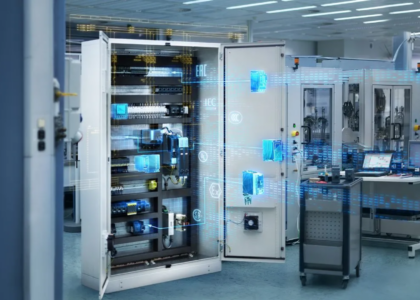
MCCs are an assembly of one or more enclosed sections having a common horizontal main power bus and factory assembled motor control units or buckets which are connected to a vertical bus. Historically motor control centers were an assembly of numerous motor starters or feeder breakers used to control individual motors.  Today they can incorporate variable frequency drives, soft starters, solid state/digital control devices, PLCs, HMIs and contain network communication protocols such as profibus, profinet or ethernet.

Uncategorized

Applications for the Siemens Open Controller

An open controller (not to be confused with an open-loop controller) is a control system that has multiple processors embedded into the controller itself. Because of this, open controllers are able to run both ladder logic and windows-based applications inside a singular enclosure. The consolidation of these processes allows for flexibility, giving your controller the ability to run, monitor, and access a plethora of applications. Below, we’ll address a few of the most prominent applications of a Siemens open controller in contemporary factories and discuss the advantages an open controller may offer your company in the long run.

Uncategorized

The Internet of Things: Influencing the Modern Factory

The Internet of Things is a system of interrelated computing devices with the ability to transfer data over a network without requiring human-to-human or human-to-machine interaction. In a factory setting, the Internet of Things is even more specialized, denoted as the Industrial Internet of Things (IIoT). Below, we’ll discuss the specific advantages of IIoT and how utilizing this new interconnective technology influences the modern factory environment by saving time, energy, and money.