Straight to the Point: Weidmueller Rockstar®


The burgeoning technology of 3D printing has taken the industry and popular culture by storm. For instance, a story recently surfaced that a high school student from San Diego utilized 3D printing to make face shields to protect healthcare workers during the COVID-19 pandemic. This is just a small example of the power of 3D printing. But how can 3D printing impact your organization and improve the efficiency of the manufacturing process? Below, we’ll discuss the basics of 3D printing (also known as additive manufacturing) and how businesses are leveraging this growing technology to benefit their organization’s bottom line.
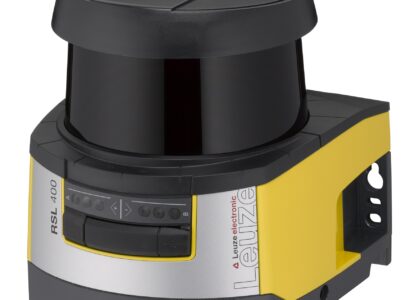
The Leuze RSL 400 family of safety laser scanners comprises 16 device types in four staggered operating ranges and function variants. As a result, you can always select the best scanner at the best price/performance ratio – if necessary, with a scanning range of 160 square meters thanks to a scanning angle of 270° and operating range of 8.25 meters. Whether mobile or stationary – the RSL 400 family covers all conceivable applications.
Download Information
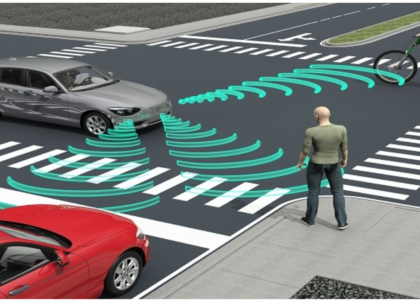
Technology has always strived to make life better and easier for the general population. Whether it’s air conditioning keeping you cool on a warm summer day or a cell phone streamlining communication and interaction with the world, technology’s goal has remained unchanged. An emerging example of technology’s ability to simplify the world around us is in autonomous vehicles. Below we’ll walk through the basics of autonomous vehicles, the advantages they provide, and how your business can possibly leverage them in the future to enhance productivity.

Modern computing power has given businesses the ability to analyze vast data sets quickly and make changes to system processes based on various outputs. However, as technology continues to advance, computing power grows exponentially more powerful. Quantum computing is the next step in the evolution of computing power, offering the capability to solve seemingly impossible problems unimaginably fast. Below, we’ll break down the basics of quantum computing and discuss how organizations can utilize it in the future to improve factory efficiency and performance.
With the dawn of IIoT and the introduction of smart technology used for tracking and logging copious amounts of data and information, data access and storage are becoming an even more critical component to modern factory applications. Cloud computing and edge computing serve as the primary tools utilized by factories to access, store, and process data. Below, we’ll break down the distinctions between cloud and edge computing and discuss how they both are shaping the modern factory environment for the better.
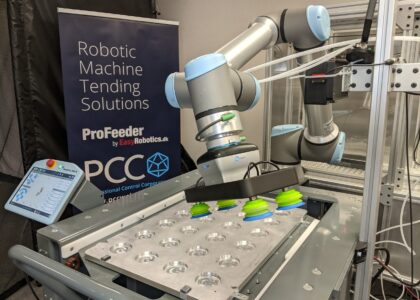
A local food manufacturer approached PCC Robotics with a challenging palletizing application including two major hurdles. The first issue was to find a way to grip the product reliably without leaving any marks or crushing the surface. Secondly, due to the product geometry and need to palletize in a bag-lined bin, there were challenges to reach all corners throughout the loading process. To make things a little more interesting the customer reported several other solution providers reviewed the application and not one chose to submit a quote.
The PCC Robotics engineering team reviewed the application and considered a handful of potential solutions that would utilize standard tools in the Universal-Robots Polyscope programming environment. Working with the customer’s raw product and actual bin and bag combination, the engineering team recreated the application in the PCC Robotics Germantown, WI robot lab.
To address the gripping challenge, the engineering team utilized the customizable OnRobot intelligent vacuum gripper VGC-10. This gripper’s clever design allows for an infinite amount of customization. PCC Robotics designed a suction cup support bracket in Solidworks then 3D printed it on a Markforged Onyx One printer. FDA approved cups were added to the design as they would come in direct contact with the food product. Once the gripping solution was proven, the palletizing constraints needed to be addressed. Dan Carney, General Manager of PCC Robotics, said “One of the real challenges in working with a six-axis collaborative robot in tight spaces, is literally finding methods for the robot to get out of its own way.”
The engineering team developed and tested an uncomplicated solution where the customer approved the project for purchase – all without leaving their plant. To add to the challenge, the bulk of the development took place in the early stages of the COVID-19 outbreak in the US. The success with this kind of remote development was only possible through clear and concise communication between all parties involved. Very accurate placement of robot base, bin, and product staging were modeled and shared to assure smooth installation and commissioning.
Eventually the hardware solution was delivered to food manufacturer’s site and commissioning began. Production runs occurred in a matter of a few days and while a few programming improvements have been made since, the system was largely operational at start-up.
The Basics
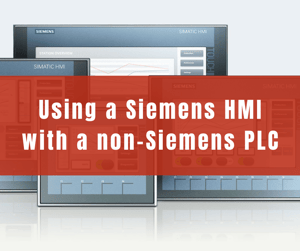
A Human-Machine-Interface (HMI) is a user interface or dashboard that connects a person to a machine, device, or system. In industrial settings, HMIs can be used for a multitude of tasks including visually displaying data, tracking production time and trends, monitoring machine inputs and outputs, and much more. As industrial automation becomes increasingly digitized, HMIs have grown more and more essential to understand and interact with systems and various processes. However, there are certain roadblocks users may encounter when attempting to configure an HMI to a PLC should both products not be from the same manufacturer. Below, we’ll walk through the process of setting up and using a Siemens HMI with a non-Siemens PLC and discuss the advantages that an HMI can provide to your business.