Yaskawa Motoman Has Sold 500,000 Industrial Robots
In February, Yaskawa Motoman, one of the world’s largest industrial automation companies, has sold 500,000 industrial robots.


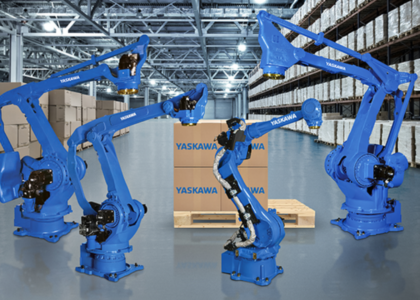
In February, Yaskawa Motoman, one of the world’s largest industrial automation companies, has sold 500,000 industrial robots.
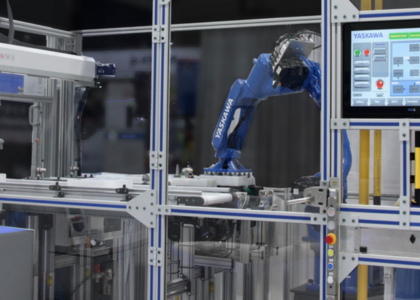
What are Pick and Place Robots?
Pick and place automation speeds up the process of picking up parts or items and placing them in other locations. Pick and place robots are commonly used in modern manufacturing environments. Pick and place robots handle repetitive tasks while freeing up human workers to focus on more complex work. Automating this process helps to increase production rates.

A – Z of Tech: Episode 20: R for Robotics
Listen to the podcast HERE
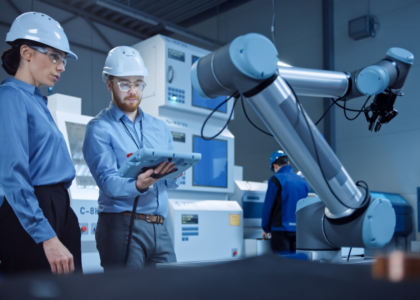
It’s easy to see why collaborative robots and SmartPendants are the best when it comes to learning robotics for the first time. We gave this 7-year-old a Yaskawa SmartPendant and asked this question: How long does it take a 7-year-old to learn to use a collaborative robot?
The answer: less than 1 hour!
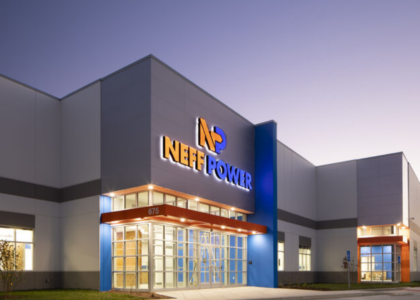
The intuitive touchscreen of the SmartPendant is the key to a smooth transition to robotics. The human-collaborative features of the HC10 make it safe to program in both industrial and educational environments. This video was taken in the Neff Power robotics laboratory, which opens to a warehouse and manufacturing area. We encourage all of our customers to schedule a visit so they can try out our demo robots, too!

If humans and machines are to work together in close proximity while maintaining a safe environment, functional safety will take today’s production systems one step closer to more flexibility. Below are end-of-arm tooling and safety solutions to use in collaboration with collaborative robots.
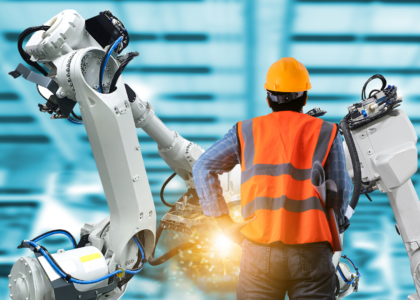
With Anthony Amunategui and Ginny Foster
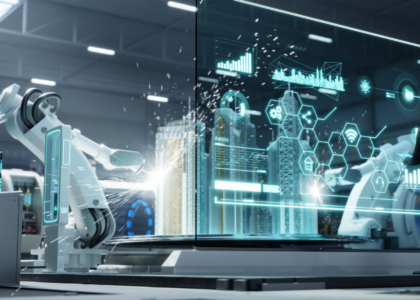
With the right advanced machine safety devices, you can use an industrial robot and integrate safety features that are similar to a those of a collaborative robot.
The result is an industrial robot with hybrid collaborative safety features.
Neff Power has a robotics lab in which we demo robotics applications. In our lab is an industrial Yaskawa GP25 robot (General Purpose 25 kg payload). We are able to perform live demos by incorporating Speed & Separation Monitoring and Stop-State Monitoring using the SICK Safety SBOT controller.
Safe robotics solutions ensure the safety of humans. It’s important to have safety in order to increase flexibility and capabilities with robotics. By using safety laser scanners from SICK to detect and monitor the surroundings for objects and people entering the envelope of the robot arm, in combination with the built-in safety features of the Yaskawa Motoman robots, we are able to prototype and do proof-of-concepts in our robotics lab for applications that were previously non-automated processes.
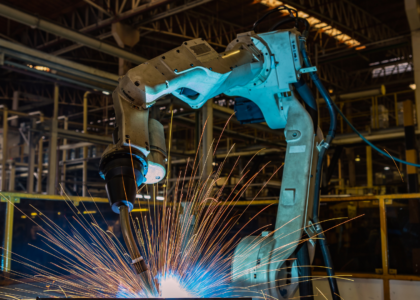
Recent years have seen significant advancements in industrial automation applications in the fields of drive systems and object detection, paving the way for a new age of interaction between human and machine. Depending on the amount of interaction between the robot and human, different levels of safety precautions are needed.
CoexistenceEven in industrial robot applications in which no human intervention is required during the production process, it will still be necessary for an operator to enter the robot’s workspace, e.g., for the purpose of maintenance work. In applications of this type, the workspace must be fenced off and the access doors must be interlocked. The interlock must ensure that hazardous robot functions are shut down whenever an operator enters the hazardous area.
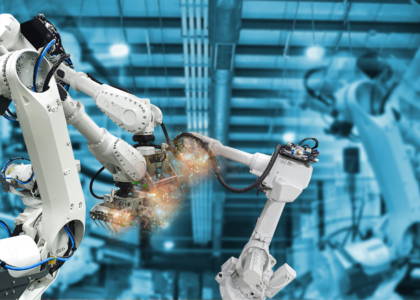
Q-T.A.L.K.S Episode 17: How to become robotics champion in manufacturing
Listen to the episode HERE.